
Product
Recommend Products
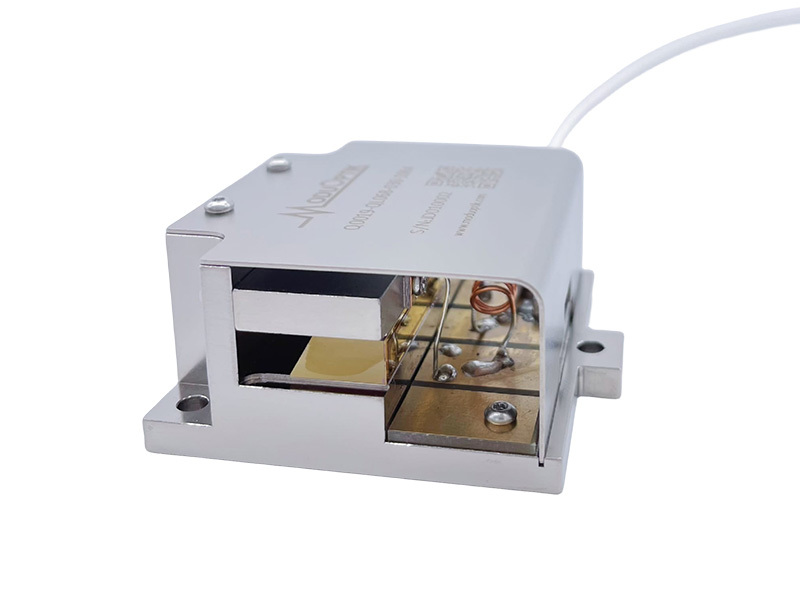
Q0002-QL080-015-1064
Acousto-optic Q-switches are in-cavity devices used to generate very high peak power, short duration laser pulses. Acousto-optic Q-switches are typically loss modulators that operate on a zero-level beam. The goal of a Q-switch is to diffract as much power as possible from the zero-level to increase cavity losses and prevent laser output. When the Q-switched RF driver turns off instantaneously, the optical power accumulated in the laser is emitted as a short pulse. The process can be repeated at a rate of more than 100KHz. Depending on the frequency and interaction length, acousto-optic Q-switches either operate in Bragg mode, like AOM, using mainly a single diffracted beam, or use multiple diffracted beams in Raman-Nath mode.
关键词:
隐藏域元素占位
Q0003-QL080-015-1064
Acousto-optic Q-switches are in-cavity devices used to generate very high peak power, short duration laser pulses. Acousto-optic Q-switches are typically loss modulators that operate on a zero-level beam. The goal of a Q-switch is to diffract as much power as possible from the zero-level to increase cavity losses and prevent laser output. When the Q-switched RF driver turns off instantaneously, the optical power accumulated in the laser is emitted as a short pulse. The process can be repeated at a rate of more than 100KHz. Depending on the frequency and interaction length, acousto-optic Q-switches either operate in Bragg mode, like AOM, using mainly a single diffracted beam, or use multiple diffracted beams in Raman-Nath mode.
关键词:
隐藏域元素占位
Q0015-FL027-040-1064
Acousto-optic Q-switches are in-cavity devices used to generate very high peak power, short duration laser pulses. Acousto-optic Q-switches are typically loss modulators that operate on a zero-level beam. The goal of a Q-switch is to diffract as much power as possible from the zero-level to increase cavity losses and prevent laser output. When the Q-switched RF driver turns off instantaneously, the optical power accumulated in the laser is emitted as a short pulse. The process can be repeated at a rate of more than 100KHz. Depending on the frequency and interaction length, acousto-optic Q-switches either operate in Bragg mode, like AOM, using mainly a single diffracted beam, or use multiple diffracted beams in Raman-Nath mode.
关键词:
隐藏域元素占位
Q0016-FL041-050-1064
Acousto-optic Q-switches are in-cavity devices used to generate very high peak power, short duration laser pulses. Acousto-optic Q-switches are typically loss modulators that operate on a zero-level beam. The goal of a Q-switch is to diffract as much power as possible from the zero-level to increase cavity losses and prevent laser output. When the Q-switched RF driver turns off instantaneously, the optical power accumulated in the laser is emitted as a short pulse. The process can be repeated at a rate of more than 100KHz. Depending on the frequency and interaction length, acousto-optic Q-switches either operate in Bragg mode, like AOM, using mainly a single diffracted beam, or use multiple diffracted beams in Raman-Nath mode.
关键词:
隐藏域元素占位
Q0017-QL080-030-1064
Acousto-optic Q-switches are in-cavity devices used to generate very high peak power, short duration laser pulses. Acousto-optic Q-switches are typically loss modulators that operate on a zero-level beam. The goal of a Q-switch is to diffract as much power as possible from the zero-level to increase cavity losses and prevent laser output. When the Q-switched RF driver turns off instantaneously, the optical power accumulated in the laser is emitted as a short pulse. The process can be repeated at a rate of more than 100KHz. Depending on the frequency and interaction length, acousto-optic Q-switches either operate in Bragg mode, like AOM, using mainly a single diffracted beam, or use multiple diffracted beams in Raman-Nath mode.
关键词:
隐藏域元素占位
Q0018-QL041-015-1064
Acousto-optic Q-switches are in-cavity devices used to generate very high peak power, short duration laser pulses. Acousto-optic Q-switches are typically loss modulators that operate on a zero-level beam. The goal of a Q-switch is to diffract as much power as possible from the zero-level to increase cavity losses and prevent laser output. When the Q-switched RF driver turns off instantaneously, the optical power accumulated in the laser is emitted as a short pulse. The process can be repeated at a rate of more than 100KHz. Depending on the frequency and interaction length, acousto-optic Q-switches either operate in Bragg mode, like AOM, using mainly a single diffracted beam, or use multiple diffracted beams in Raman-Nath mode.
关键词:
隐藏域元素占位
Q0019-QL068-030-1064
Acousto-optic Q-switches are in-cavity devices used to generate very high peak power, short duration laser pulses. Acousto-optic Q-switches are typically loss modulators that operate on a zero-level beam. The goal of a Q-switch is to diffract as much power as possible from the zero-level to increase cavity losses and prevent laser output. When the Q-switched RF driver turns off instantaneously, the optical power accumulated in the laser is emitted as a short pulse. The process can be repeated at a rate of more than 100KHz. Depending on the frequency and interaction length, acousto-optic Q-switches either operate in Bragg mode, like AOM, using mainly a single diffracted beam, or use multiple diffracted beams in Raman-Nath mode.
关键词:
隐藏域元素占位
Q0020-FL027-060-1064
Acousto-optic Q-switches are in-cavity devices used to generate very high peak power, short duration laser pulses. Acousto-optic Q-switches are typically loss modulators that operate on a zero-level beam. The goal of a Q-switch is to diffract as much power as possible from the zero-level to increase cavity losses and prevent laser output. When the Q-switched RF driver turns off instantaneously, the optical power accumulated in the laser is emitted as a short pulse. The process can be repeated at a rate of more than 100KHz. Depending on the frequency and interaction length, acousto-optic Q-switches either operate in Bragg mode, like AOM, using mainly a single diffracted beam, or use multiple diffracted beams in Raman-Nath mode.
关键词:
隐藏域元素占位
Q0021-FS041-060-1064
Acousto-optic Q-switches are in-cavity devices used to generate very high peak power, short duration laser pulses. Acousto-optic Q-switches are typically loss modulators that operate on a zero-level beam. The goal of a Q-switch is to diffract as much power as possible from the zero-level to increase cavity losses and prevent laser output. When the Q-switched RF driver turns off instantaneously, the optical power accumulated in the laser is emitted as a short pulse. The process can be repeated at a rate of more than 100KHz. Depending on the frequency and interaction length, acousto-optic Q-switches either operate in Bragg mode, like AOM, using mainly a single diffracted beam, or use multiple diffracted beams in Raman-Nath mode.
关键词:
隐藏域元素占位
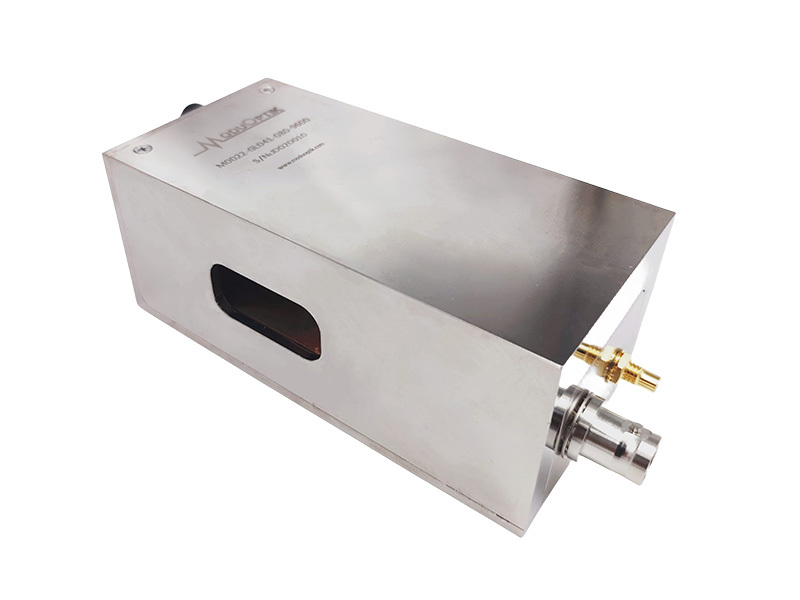
Q0022-QL068-060-1064
Acousto-optic Q-switches are in-cavity devices used to generate very high peak power, short duration laser pulses. Acousto-optic Q-switches are typically loss modulators that operate on a zero-level beam. The goal of a Q-switch is to diffract as much power as possible from the zero-level to increase cavity losses and prevent laser output. When the Q-switched RF driver turns off instantaneously, the optical power accumulated in the laser is emitted as a short pulse. The process can be repeated at a rate of more than 100KHz. Depending on the frequency and interaction length, acousto-optic Q-switches either operate in Bragg mode, like AOM, using mainly a single diffracted beam, or use multiple diffracted beams in Raman-Nath mode.
关键词:
隐藏域元素占位
Q0023-QL080-010-1064
Acousto-optic Q-switches are in-cavity devices used to generate very high peak power, short duration laser pulses. Acousto-optic Q-switches are typically loss modulators that operate on a zero-level beam. The goal of a Q-switch is to diffract as much power as possible from the zero-level to increase cavity losses and prevent laser output. When the Q-switched RF driver turns off instantaneously, the optical power accumulated in the laser is emitted as a short pulse. The process can be repeated at a rate of more than 100KHz. Depending on the frequency and interaction length, acousto-optic Q-switches either operate in Bragg mode, like AOM, using mainly a single diffracted beam, or use multiple diffracted beams in Raman-Nath mode.
关键词:
隐藏域元素占位
Q0027-QL080-015-1064
Acousto-optic Q-switches are in-cavity devices used to generate very high peak power, short duration laser pulses. Acousto-optic Q-switches are typically loss modulators that operate on a zero-level beam. The goal of a Q-switch is to diffract as much power as possible from the zero-level to increase cavity losses and prevent laser output. When the Q-switched RF driver turns off instantaneously, the optical power accumulated in the laser is emitted as a short pulse. The process can be repeated at a rate of more than 100KHz. Depending on the frequency and interaction length, acousto-optic Q-switches either operate in Bragg mode, like AOM, using mainly a single diffracted beam, or use multiple diffracted beams in Raman-Nath mode.
关键词:
隐藏域元素占位
Q0029-QL080-015-1064
Acousto-optic Q-switches are in-cavity devices used to generate very high peak power, short duration laser pulses. Acousto-optic Q-switches are typically loss modulators that operate on a zero-level beam. The goal of a Q-switch is to diffract as much power as possible from the zero-level to increase cavity losses and prevent laser output. When the Q-switched RF driver turns off instantaneously, the optical power accumulated in the laser is emitted as a short pulse. The process can be repeated at a rate of more than 100KHz. Depending on the frequency and interaction length, acousto-optic Q-switches either operate in Bragg mode, like AOM, using mainly a single diffracted beam, or use multiple diffracted beams in Raman-Nath mode.
关键词:
隐藏域元素占位
Q0030-QL080-012-1064
Acousto-optic Q-switches are in-cavity devices used to generate very high peak power, short duration laser pulses. Acousto-optic Q-switches are typically loss modulators that operate on a zero-level beam. The goal of a Q-switch is to diffract as much power as possible from the zero-level to increase cavity losses and prevent laser output. When the Q-switched RF driver turns off instantaneously, the optical power accumulated in the laser is emitted as a short pulse. The process can be repeated at a rate of more than 100KHz. Depending on the frequency and interaction length, acousto-optic Q-switches either operate in Bragg mode, like AOM, using mainly a single diffracted beam, or use multiple diffracted beams in Raman-Nath mode.
关键词:
隐藏域元素占位
Q0031-QL041-015-1064
Acousto-optic Q-switches are in-cavity devices used to generate very high peak power, short duration laser pulses. Acousto-optic Q-switches are typically loss modulators that operate on a zero-level beam. The goal of a Q-switch is to diffract as much power as possible from the zero-level to increase cavity losses and prevent laser output. When the Q-switched RF driver turns off instantaneously, the optical power accumulated in the laser is emitted as a short pulse. The process can be repeated at a rate of more than 100KHz. Depending on the frequency and interaction length, acousto-optic Q-switches either operate in Bragg mode, like AOM, using mainly a single diffracted beam, or use multiple diffracted beams in Raman-Nath mode.
关键词:
隐藏域元素占位
Q0032-QL080-025-1064
Acousto-optic Q-switches are in-cavity devices used to generate very high peak power, short duration laser pulses. Acousto-optic Q-switches are typically loss modulators that operate on a zero-level beam. The goal of a Q-switch is to diffract as much power as possible from the zero-level to increase cavity losses and prevent laser output. When the Q-switched RF driver turns off instantaneously, the optical power accumulated in the laser is emitted as a short pulse. The process can be repeated at a rate of more than 100KHz. Depending on the frequency and interaction length, acousto-optic Q-switches either operate in Bragg mode, like AOM, using mainly a single diffracted beam, or use multiple diffracted beams in Raman-Nath mode.
关键词:
隐藏域元素占位
Q0033-QL068-030-1030
Acousto-optic Q-switches are in-cavity devices used to generate very high peak power, short duration laser pulses. Acousto-optic Q-switches are typically loss modulators that operate on a zero-level beam. The goal of a Q-switch is to diffract as much power as possible from the zero-level to increase cavity losses and prevent laser output. When the Q-switched RF driver turns off instantaneously, the optical power accumulated in the laser is emitted as a short pulse. The process can be repeated at a rate of more than 100KHz. Depending on the frequency and interaction length, acousto-optic Q-switches either operate in Bragg mode, like AOM, using mainly a single diffracted beam, or use multiple diffracted beams in Raman-Nath mode.
关键词:
隐藏域元素占位
Q0034-QL080-012-1064
Acousto-optic Q-switches are in-cavity devices used to generate very high peak power, short duration laser pulses. Acousto-optic Q-switches are typically loss modulators that operate on a zero-level beam. The goal of a Q-switch is to diffract as much power as possible from the zero-level to increase cavity losses and prevent laser output. When the Q-switched RF driver turns off instantaneously, the optical power accumulated in the laser is emitted as a short pulse. The process can be repeated at a rate of more than 100KHz. Depending on the frequency and interaction length, acousto-optic Q-switches either operate in Bragg mode, like AOM, using mainly a single diffracted beam, or use multiple diffracted beams in Raman-Nath mode.
关键词:
隐藏域元素占位
Q0035-QL041-015-1064
Acousto-optic Q-switches are in-cavity devices used to generate very high peak power, short duration laser pulses. Acousto-optic Q-switches are typically loss modulators that operate on a zero-level beam. The goal of a Q-switch is to diffract as much power as possible from the zero-level to increase cavity losses and prevent laser output. When the Q-switched RF driver turns off instantaneously, the optical power accumulated in the laser is emitted as a short pulse. The process can be repeated at a rate of more than 100KHz. Depending on the frequency and interaction length, acousto-optic Q-switches either operate in Bragg mode, like AOM, using mainly a single diffracted beam, or use multiple diffracted beams in Raman-Nath mode.
关键词:
隐藏域元素占位
Q0036-FS041-060-2000
Acousto-optic Q-switches are in-cavity devices used to generate very high peak power, short duration laser pulses. Acousto-optic Q-switches are typically loss modulators that operate on a zero-level beam. The goal of a Q-switch is to diffract as much power as possible from the zero-level to increase cavity losses and prevent laser output. When the Q-switched RF driver turns off instantaneously, the optical power accumulated in the laser is emitted as a short pulse. The process can be repeated at a rate of more than 100KHz. Depending on the frequency and interaction length, acousto-optic Q-switches either operate in Bragg mode, like AOM, using mainly a single diffracted beam, or use multiple diffracted beams in Raman-Nath mode.
关键词:
隐藏域元素占位
Q0037-FS068-060-1064
Acousto-optic Q-switches are in-cavity devices used to generate very high peak power, short duration laser pulses. Acousto-optic Q-switches are typically loss modulators that operate on a zero-level beam. The goal of a Q-switch is to diffract as much power as possible from the zero-level to increase cavity losses and prevent laser output. When the Q-switched RF driver turns off instantaneously, the optical power accumulated in the laser is emitted as a short pulse. The process can be repeated at a rate of more than 100KHz. Depending on the frequency and interaction length, acousto-optic Q-switches either operate in Bragg mode, like AOM, using mainly a single diffracted beam, or use multiple diffracted beams in Raman-Nath mode.
关键词:
隐藏域元素占位
Q0038-QL080-050-1030
Acousto-optic Q-switches are in-cavity devices used to generate very high peak power, short duration laser pulses. Acousto-optic Q-switches are typically loss modulators that operate on a zero-level beam. The goal of a Q-switch is to diffract as much power as possible from the zero-level to increase cavity losses and prevent laser output. When the Q-switched RF driver turns off instantaneously, the optical power accumulated in the laser is emitted as a short pulse. The process can be repeated at a rate of more than 100KHz. Depending on the frequency and interaction length, acousto-optic Q-switches either operate in Bragg mode, like AOM, using mainly a single diffracted beam, or use multiple diffracted beams in Raman-Nath mode.
关键词:
隐藏域元素占位
Q0040-FL027-020-1064
Acousto-optic Q-switches are in-cavity devices used to generate very high peak power, short duration laser pulses. Acousto-optic Q-switches are typically loss modulators that operate on a zero-level beam. The goal of a Q-switch is to diffract as much power as possible from the zero-level to increase cavity losses and prevent laser output. When the Q-switched RF driver turns off instantaneously, the optical power accumulated in the laser is emitted as a short pulse. The process can be repeated at a rate of more than 100KHz. Depending on the frequency and interaction length, acousto-optic Q-switches either operate in Bragg mode, like AOM, using mainly a single diffracted beam, or use multiple diffracted beams in Raman-Nath mode.
关键词:
隐藏域元素占位
Q0041-QL068-025-1880
Acousto-optic Q-switches are in-cavity devices used to generate very high peak power, short duration laser pulses. Acousto-optic Q-switches are typically loss modulators that operate on a zero-level beam. The goal of a Q-switch is to diffract as much power as possible from the zero-level to increase cavity losses and prevent laser output. When the Q-switched RF driver turns off instantaneously, the optical power accumulated in the laser is emitted as a short pulse. The process can be repeated at a rate of more than 100KHz. Depending on the frequency and interaction length, acousto-optic Q-switches either operate in Bragg mode, like AOM, using mainly a single diffracted beam, or use multiple diffracted beams in Raman-Nath mode.
关键词:
隐藏域元素占位
Q0042-QL080-015-1064
Acousto-optic Q-switches are in-cavity devices used to generate very high peak power, short duration laser pulses. Acousto-optic Q-switches are typically loss modulators that operate on a zero-level beam. The goal of a Q-switch is to diffract as much power as possible from the zero-level to increase cavity losses and prevent laser output. When the Q-switched RF driver turns off instantaneously, the optical power accumulated in the laser is emitted as a short pulse. The process can be repeated at a rate of more than 100KHz. Depending on the frequency and interaction length, acousto-optic Q-switches either operate in Bragg mode, like AOM, using mainly a single diffracted beam, or use multiple diffracted beams in Raman-Nath mode.
关键词:
隐藏域元素占位
Q0043-QL041-040-2000
ModuOptik has a complete solution can be applied to polarized(Brewster angle cut)or non-polarized lasers and can be adapted to lamp pumped lasers and LD pumped lasers.Our AOQS product wavelength range from UV to far infrared,diameter up to 12 mm.AOQS selects AO materials with excellent quality (Fused quartz,Crystalline quartz,Gecrystal,etc.),which can be designed into shearand longitudinal wave mode according to needs.High quality optical polishing,anti-reflective coatings with low reflection and high damage threshold,reliable welding techniques,and novel acoustic management and optical mechanical design techniques enable excellent thermal management, maintaining excellent beam quality and high transmittance.
关键词:
隐藏域元素占位
Q0044-QL041-012-1064
Acousto-optic Q-switches are in-cavity devices used to generate very high peak power, short duration laser pulses. Acousto-optic Q-switches are typically loss modulators that operate on a zero-level beam. The goal of a Q-switch is to diffract as much power as possible from the zero-level to increase cavity losses and prevent laser output. When the Q-switched RF driver turns off instantaneously, the optical power accumulated in the laser is emitted as a short pulse. The process can be repeated at a rate of more than 100KHz. Depending on the frequency and interaction length, acousto-optic Q-switches either operate in Bragg mode, like AOM, using mainly a single diffracted beam, or use multiple diffracted beams in Raman-Nath mode.
关键词:
隐藏域元素占位
Q0045-QL080-010-1540
Acousto-optic Q-switches are in-cavity devices used to generate very high peak power, short duration laser pulses. Acousto-optic Q-switches are typically loss modulators that operate on a zero-level beam. The goal of a Q-switch is to diffract as much power as possible from the zero-level to increase cavity losses and prevent laser output. When the Q-switched RF driver turns off instantaneously, the optical power accumulated in the laser is emitted as a short pulse. The process can be repeated at a rate of more than 100KHz. Depending on the frequency and interaction length, acousto-optic Q-switches either operate in Bragg mode, like AOM, using mainly a single diffracted beam, or use multiple diffracted beams in Raman-Nath mode.
关键词:
隐藏域元素占位
Q0046-FS027-020-1064
Acousto-optic Q-switches are in-cavity devices used to generate very high peak power, short duration laser pulses. Acousto-optic Q-switches are typically loss modulators that operate on a zero-level beam. The goal of a Q-switch is to diffract as much power as possible from the zero-level to increase cavity losses and prevent laser output. When the Q-switched RF driver turns off instantaneously, the optical power accumulated in the laser is emitted as a short pulse. The process can be repeated at a rate of more than 100KHz. Depending on the frequency and interaction length, acousto-optic Q-switches either operate in Bragg mode, like AOM, using mainly a single diffracted beam, or use multiple diffracted beams in Raman-Nath mode.
关键词:
隐藏域元素占位
Q0047-TL080-012-1030
Acousto-optic Q-switches are in-cavity devices used to generate very high peak power, short duration laser pulses. Acousto-optic Q-switches are typically loss modulators that operate on a zero-level beam. The goal of a Q-switch is to diffract as much power as possible from the zero-level to increase cavity losses and prevent laser output. When the Q-switched RF driver turns off instantaneously, the optical power accumulated in the laser is emitted as a short pulse. The process can be repeated at a rate of more than 100KHz. Depending on the frequency and interaction length, acousto-optic Q-switches either operate in Bragg mode, like AOM, using mainly a single diffracted beam, or use multiple diffracted beams in Raman-Nath mode.
关键词:
隐藏域元素占位
Q0048-QL080-010-1064
Acousto-optic Q-switches are in-cavity devices used to generate very high peak power, short duration laser pulses. Acousto-optic Q-switches are typically loss modulators that operate on a zero-level beam. The goal of a Q-switch is to diffract as much power as possible from the zero-level to increase cavity losses and prevent laser output. When the Q-switched RF driver turns off instantaneously, the optical power accumulated in the laser is emitted as a short pulse. The process can be repeated at a rate of more than 100KHz. Depending on the frequency and interaction length, acousto-optic Q-switches either operate in Bragg mode, like AOM, using mainly a single diffracted beam, or use multiple diffracted beams in Raman-Nath mode.
关键词:
隐藏域元素占位
Q0049-FL041-040-1064
Acousto-optic Q-switches are in-cavity devices used to generate very high peak power, short duration laser pulses. Acousto-optic Q-switches are typically loss modulators that operate on a zero-level beam. The goal of a Q-switch is to diffract as much power as possible from the zero-level to increase cavity losses and prevent laser output. When the Q-switched RF driver turns off instantaneously, the optical power accumulated in the laser is emitted as a short pulse. The process can be repeated at a rate of more than 100KHz. Depending on the frequency and interaction length, acousto-optic Q-switches either operate in Bragg mode, like AOM, using mainly a single diffracted beam, or use multiple diffracted beams in Raman-Nath mode.
关键词:
隐藏域元素占位
Q0050-FS041-040-1064
Acousto-optic Q-switches are in-cavity devices used to generate very high peak power, short duration laser pulses. Acousto-optic Q-switches are typically loss modulators that operate on a zero-level beam. The goal of a Q-switch is to diffract as much power as possible from the zero-level to increase cavity losses and prevent laser output. When the Q-switched RF driver turns off instantaneously, the optical power accumulated in the laser is emitted as a short pulse. The process can be repeated at a rate of more than 100KHz. Depending on the frequency and interaction length, acousto-optic Q-switches either operate in Bragg mode, like AOM, using mainly a single diffracted beam, or use multiple diffracted beams in Raman-Nath mode.
关键词:
隐藏域元素占位
Q0051-FS041-050-1064
Acousto-optic Q-switches are in-cavity devices used to generate very high peak power, short duration laser pulses. Acousto-optic Q-switches are typically loss modulators that operate on a zero-level beam. The goal of a Q-switch is to diffract as much power as possible from the zero-level to increase cavity losses and prevent laser output. When the Q-switched RF driver turns off instantaneously, the optical power accumulated in the laser is emitted as a short pulse. The process can be repeated at a rate of more than 100KHz. Depending on the frequency and interaction length, acousto-optic Q-switches either operate in Bragg mode, like AOM, using mainly a single diffracted beam, or use multiple diffracted beams in Raman-Nath mode.
关键词:
隐藏域元素占位
Q0052-FL027-020-1064
Acousto-optic Q-switches are in-cavity devices used to generate very high peak power, short duration laser pulses. Acousto-optic Q-switches are typically loss modulators that operate on a zero-level beam. The goal of a Q-switch is to diffract as much power as possible from the zero-level to increase cavity losses and prevent laser output. When the Q-switched RF driver turns off instantaneously, the optical power accumulated in the laser is emitted as a short pulse. The process can be repeated at a rate of more than 100KHz. Depending on the frequency and interaction length, acousto-optic Q-switches either operate in Bragg mode, like AOM, using mainly a single diffracted beam, or use multiple diffracted beams in Raman-Nath mode.
关键词:
隐藏域元素占位
Q0053-FL041-020-1064
Acousto-optic Q-switches are in-cavity devices used to generate very high peak power, short duration laser pulses. Acousto-optic Q-switches are typically loss modulators that operate on a zero-level beam. The goal of a Q-switch is to diffract as much power as possible from the zero-level to increase cavity losses and prevent laser output. When the Q-switched RF driver turns off instantaneously, the optical power accumulated in the laser is emitted as a short pulse. The process can be repeated at a rate of more than 100KHz. Depending on the frequency and interaction length, acousto-optic Q-switches either operate in Bragg mode, like AOM, using mainly a single diffracted beam, or use multiple diffracted beams in Raman-Nath mode.
关键词:
隐藏域元素占位
Q0054-QL060-040-1030
Acousto-optic Q-switches are in-cavity devices used to generate very high peak power, short duration laser pulses. Acousto-optic Q-switches are typically loss modulators that operate on a zero-level beam. The goal of a Q-switch is to diffract as much power as possible from the zero-level to increase cavity losses and prevent laser output. When the Q-switched RF driver turns off instantaneously, the optical power accumulated in the laser is emitted as a short pulse. The process can be repeated at a rate of more than 100KHz. Depending on the frequency and interaction length, acousto-optic Q-switches either operate in Bragg mode, like AOM, using mainly a single diffracted beam, or use multiple diffracted beams in Raman-Nath mode.
关键词:
隐藏域元素占位
Q0056-QL080-030-1064
Acousto-optic Q-switches are in-cavity devices used to generate very high peak power, short duration laser pulses. Acousto-optic Q-switches are typically loss modulators that operate on a zero-level beam. The goal of a Q-switch is to diffract as much power as possible from the zero-level to increase cavity losses and prevent laser output. When the Q-switched RF driver turns off instantaneously, the optical power accumulated in the laser is emitted as a short pulse. The process can be repeated at a rate of more than 100KHz. Depending on the frequency and interaction length, acousto-optic Q-switches either operate in Bragg mode, like AOM, using mainly a single diffracted beam, or use multiple diffracted beams in Raman-Nath mode.
关键词:
隐藏域元素占位
Q0057-QL080-010-1064
Acousto-optic Q-switches are in-cavity devices used to generate very high peak power, short duration laser pulses. Acousto-optic Q-switches are typically loss modulators that operate on a zero-level beam. The goal of a Q-switch is to diffract as much power as possible from the zero-level to increase cavity losses and prevent laser output. When the Q-switched RF driver turns off instantaneously, the optical power accumulated in the laser is emitted as a short pulse. The process can be repeated at a rate of more than 100KHz. Depending on the frequency and interaction length, acousto-optic Q-switches either operate in Bragg mode, like AOM, using mainly a single diffracted beam, or use multiple diffracted beams in Raman-Nath mode.
关键词:
隐藏域元素占位
Q0058-QL080-015-1064
Acousto-optic Q-switches are in-cavity devices used to generate very high peak power, short duration laser pulses. Acousto-optic Q-switches are typically loss modulators that operate on a zero-level beam. The goal of a Q-switch is to diffract as much power as possible from the zero-level to increase cavity losses and prevent laser output. When the Q-switched RF driver turns off instantaneously, the optical power accumulated in the laser is emitted as a short pulse. The process can be repeated at a rate of more than 100KHz. Depending on the frequency and interaction length, acousto-optic Q-switches either operate in Bragg mode, like AOM, using mainly a single diffracted beam, or use multiple diffracted beams in Raman-Nath mode.
关键词:
隐藏域元素占位
Q0059-QL080-010-1535
Acousto-optic Q-switches are in-cavity devices used to generate very high peak power, short duration laser pulses. Acousto-optic Q-switches are typically loss modulators that operate on a zero-level beam. The goal of a Q-switch is to diffract as much power as possible from the zero-level to increase cavity losses and prevent laser output. When the Q-switched RF driver turns off instantaneously, the optical power accumulated in the laser is emitted as a short pulse. The process can be repeated at a rate of more than 100KHz. Depending on the frequency and interaction length, acousto-optic Q-switches either operate in Bragg mode, like AOM, using mainly a single diffracted beam, or use multiple diffracted beams in Raman-Nath mode.
关键词:
隐藏域元素占位
Q0060-QL080-015-1064
Acousto-optic Q-switches are in-cavity devices used to generate very high peak power, short duration laser pulses. Acousto-optic Q-switches are typically loss modulators that operate on a zero-level beam. The goal of a Q-switch is to diffract as much power as possible from the zero-level to increase cavity losses and prevent laser output. When the Q-switched RF driver turns off instantaneously, the optical power accumulated in the laser is emitted as a short pulse. The process can be repeated at a rate of more than 100KHz. Depending on the frequency and interaction length, acousto-optic Q-switches either operate in Bragg mode, like AOM, using mainly a single diffracted beam, or use multiple diffracted beams in Raman-Nath mode.
关键词:
隐藏域元素占位
Q0061-QL080-015-1064
Acousto-optic Q-switches are in-cavity devices used to generate very high peak power, short duration laser pulses. Acousto-optic Q-switches are typically loss modulators that operate on a zero-level beam. The goal of a Q-switch is to diffract as much power as possible from the zero-level to increase cavity losses and prevent laser output. When the Q-switched RF driver turns off instantaneously, the optical power accumulated in the laser is emitted as a short pulse. The process can be repeated at a rate of more than 100KHz. Depending on the frequency and interaction length, acousto-optic Q-switches either operate in Bragg mode, like AOM, using mainly a single diffracted beam, or use multiple diffracted beams in Raman-Nath mode.
关键词:
隐藏域元素占位
Q0062-QL080-010-1064
Acousto-optic Q-switches are in-cavity devices used to generate very high peak power, short duration laser pulses. Acousto-optic Q-switches are typically loss modulators that operate on a zero-level beam. The goal of a Q-switch is to diffract as much power as possible from the zero-level to increase cavity losses and prevent laser output. When the Q-switched RF driver turns off instantaneously, the optical power accumulated in the laser is emitted as a short pulse. The process can be repeated at a rate of more than 100KHz. Depending on the frequency and interaction length, acousto-optic Q-switches either operate in Bragg mode, like AOM, using mainly a single diffracted beam, or use multiple diffracted beams in Raman-Nath mode.
关键词:
隐藏域元素占位
Q0063-QL041-015-1064
Acousto-optic Q-switches are in-cavity devices used to generate very high peak power, short duration laser pulses. Acousto-optic Q-switches are typically loss modulators that operate on a zero-level beam. The goal of a Q-switch is to diffract as much power as possible from the zero-level to increase cavity losses and prevent laser output. When the Q-switched RF driver turns off instantaneously, the optical power accumulated in the laser is emitted as a short pulse. The process can be repeated at a rate of more than 100KHz. Depending on the frequency and interaction length, acousto-optic Q-switches either operate in Bragg mode, like AOM, using mainly a single diffracted beam, or use multiple diffracted beams in Raman-Nath mode.
关键词:
隐藏域元素占位
Q0065-FL027-030-1064
Acousto-optic Q-switches are in-cavity devices used to generate very high peak power, short duration laser pulses. Acousto-optic Q-switches are typically loss modulators that operate on a zero-level beam. The goal of a Q-switch is to diffract as much power as possible from the zero-level to increase cavity losses and prevent laser output. When the Q-switched RF driver turns off instantaneously, the optical power accumulated in the laser is emitted as a short pulse. The process can be repeated at a rate of more than 100KHz. Depending on the frequency and interaction length, acousto-optic Q-switches either operate in Bragg mode, like AOM, using mainly a single diffracted beam, or use multiple diffracted beams in Raman-Nath mode.
关键词:
隐藏域元素占位
Q0066-QL041-050-2000
Acousto-optic Q-switches are in-cavity devices used to generate very high peak power, short duration laser pulses. Acousto-optic Q-switches are typically loss modulators that operate on a zero-level beam. The goal of a Q-switch is to diffract as much power as possible from the zero-level to increase cavity losses and prevent laser output. When the Q-switched RF driver turns off instantaneously, the optical power accumulated in the laser is emitted as a short pulse. The process can be repeated at a rate of more than 100KHz. Depending on the frequency and interaction length, acousto-optic Q-switches either operate in Bragg mode, like AOM, using mainly a single diffracted beam, or use multiple diffracted beams in Raman-Nath mode.
关键词:
隐藏域元素占位
Q0067-FS050-030-1064
Acousto-optic Q-switches are in-cavity devices used to generate very high peak power, short duration laser pulses. Acousto-optic Q-switches are typically loss modulators that operate on a zero-level beam. The goal of a Q-switch is to diffract as much power as possible from the zero-level to increase cavity losses and prevent laser output. When the Q-switched RF driver turns off instantaneously, the optical power accumulated in the laser is emitted as a short pulse. The process can be repeated at a rate of more than 100KHz. Depending on the frequency and interaction length, acousto-optic Q-switches either operate in Bragg mode, like AOM, using mainly a single diffracted beam, or use multiple diffracted beams in Raman-Nath mode.
关键词:
隐藏域元素占位
Q0068-QL080-012-1064
Acousto-optic Q-switches are in-cavity devices used to generate very high peak power, short duration laser pulses. Acousto-optic Q-switches are typically loss modulators that operate on a zero-level beam. The goal of a Q-switch is to diffract as much power as possible from the zero-level to increase cavity losses and prevent laser output. When the Q-switched RF driver turns off instantaneously, the optical power accumulated in the laser is emitted as a short pulse. The process can be repeated at a rate of more than 100KHz. Depending on the frequency and interaction length, acousto-optic Q-switches either operate in Bragg mode, like AOM, using mainly a single diffracted beam, or use multiple diffracted beams in Raman-Nath mode.
关键词:
隐藏域元素占位
Q0069-QL080-015-1064
Acousto-optic Q-switches are in-cavity devices used to generate very high peak power, short duration laser pulses. Acousto-optic Q-switches are typically loss modulators that operate on a zero-level beam. The goal of a Q-switch is to diffract as much power as possible from the zero-level to increase cavity losses and prevent laser output. When the Q-switched RF driver turns off instantaneously, the optical power accumulated in the laser is emitted as a short pulse. The process can be repeated at a rate of more than 100KHz. Depending on the frequency and interaction length, acousto-optic Q-switches either operate in Bragg mode, like AOM, using mainly a single diffracted beam, or use multiple diffracted beams in Raman-Nath mode.
关键词:
隐藏域元素占位
Q0070-TL120-010-1064
Acousto-optic Q-switches are in-cavity devices used to generate very high peak power, short duration laser pulses. Acousto-optic Q-switches are typically loss modulators that operate on a zero-level beam. The goal of a Q-switch is to diffract as much power as possible from the zero-level to increase cavity losses and prevent laser output. When the Q-switched RF driver turns off instantaneously, the optical power accumulated in the laser is emitted as a short pulse. The process can be repeated at a rate of more than 100KHz. Depending on the frequency and interaction length, acousto-optic Q-switches either operate in Bragg mode, like AOM, using mainly a single diffracted beam, or use multiple diffracted beams in Raman-Nath mode.
关键词:
隐藏域元素占位
M0006-QL110-030-532
Acousto optic modulators (AOM) are commonly used to adjust laser intensity (amplitude modulation,AM) outside the laser cavity. This can be simple ON/OFF modulation for fast switching, or variable modulation for laser intensity. The modulation mode is determined by the type of RF driver, which can be digital (on/off) or analog (sinusoidal, square wave, linear, random, etc). Generally, the RF driver of AOM operates at a fixed frequency.
关键词:
隐藏域元素占位
M0009-QL170-060-355
Acousto optic modulators (AOM) are commonly used to adjust laser intensity (amplitude modulation,AM) outside the laser cavity. This can be simple ON/OFF modulation for fast switching, or variable modulation for laser intensity. The modulation mode is determined by the type of RF driver, which can be digital (on/off) or analog (sinusoidal, square wave, linear, random, etc). Generally, the RF driver of AOM operates at a fixed frequency.
关键词:
隐藏域元素占位
M0010-TL080-020-450-900
Acousto optic modulators (AOM) are commonly used to adjust laser intensity (amplitude modulation,AM) outside the laser cavity. This can be simple ON/OFF modulation for fast switching, or variable modulation for laser intensity. The modulation mode is determined by the type of RF driver, which can be digital (on/off) or analog (sinusoidal, square wave, linear, random, etc). Generally, the RF driver of AOM operates at a fixed frequency.
关键词:
隐藏域元素占位
M0011-QL110-060-343
Acousto optic modulators (AOM) are commonly used to adjust laser intensity (amplitude modulation,AM) outside the laser cavity. This can be simple ON/OFF modulation for fast switching, or variable modulation for laser intensity. The modulation mode is determined by the type of RF driver, which can be digital (on/off) or analog (sinusoidal, square wave, linear, random, etc). Generally, the RF driver of AOM operates at a fixed frequency.
关键词:
隐藏域元素占位
M0012-QL200-035-266
Acousto optic modulators (AOM) are commonly used to adjust laser intensity (amplitude modulation,AM) outside the laser cavity. This can be simple ON/OFF modulation for fast switching, or variable modulation for laser intensity. The modulation mode is determined by the type of RF driver, which can be digital (on/off) or analog (sinusoidal, square wave, linear, random, etc). Generally, the RF driver of AOM operates at a fixed frequency.
关键词:
隐藏域元素占位
M0015-QL100-030-780
Acousto optic modulators (AOM) are commonly used to adjust laser intensity (amplitude modulation,AM) outside the laser cavity. This can be simple ON/OFF modulation for fast switching, or variable modulation for laser intensity. The modulation mode is determined by the type of RF driver, which can be digital (on/off) or analog (sinusoidal, square wave, linear, random, etc). Generally, the RF driver of AOM operates at a fixed frequency.
关键词:
隐藏域元素占位
M0016-QL100-010-800
Acousto optic modulators (AOM) are commonly used to adjust laser intensity (amplitude modulation,AM) outside the laser cavity. This can be simple ON/OFF modulation for fast switching, or variable modulation for laser intensity. The modulation mode is determined by the type of RF driver, which can be digital (on/off) or analog (sinusoidal, square wave, linear, random, etc). Generally, the RF driver of AOM operates at a fixed frequency.
关键词:
隐藏域元素占位
M0017-TL250-003-780-950
Acousto optic modulators (AOM) are commonly used to adjust laser intensity (amplitude modulation,AM) outside the laser cavity. This can be simple ON/OFF modulation for fast switching, or variable modulation for laser intensity. The modulation mode is determined by the type of RF driver, which can be digital (on/off) or analog (sinusoidal, square wave, linear, random, etc). Generally, the RF driver of AOM operates at a fixed frequency.
关键词:
隐藏域元素占位
M0020-QL170-050-405
Acousto optic modulators (AOM) are commonly used to adjust laser intensity (amplitude modulation,AM) outside the laser cavity. This can be simple ON/OFF modulation for fast switching, or variable modulation for laser intensity. The modulation mode is determined by the type of RF driver, which can be digital (on/off) or analog (sinusoidal, square wave, linear, random, etc). Generally, the RF driver of AOM operates at a fixed frequency.
关键词:
隐藏域元素占位

WeChat Public Number
Sales Hotline: +86-551-62103939
E-mail: sales@moduoptik.com
ADD: 1-2/F, Building A9, Gongtou Chuangzhi Tiandi, No. 1500 Beicheng Avenue, Lindian Street, Luyang District, Hefei City, Anhui Province
Navigation
Message
We will contact you within one working day. Please pay attention to your email.
Copyright: Hefei ModuOptik Technologies Co.Ltd